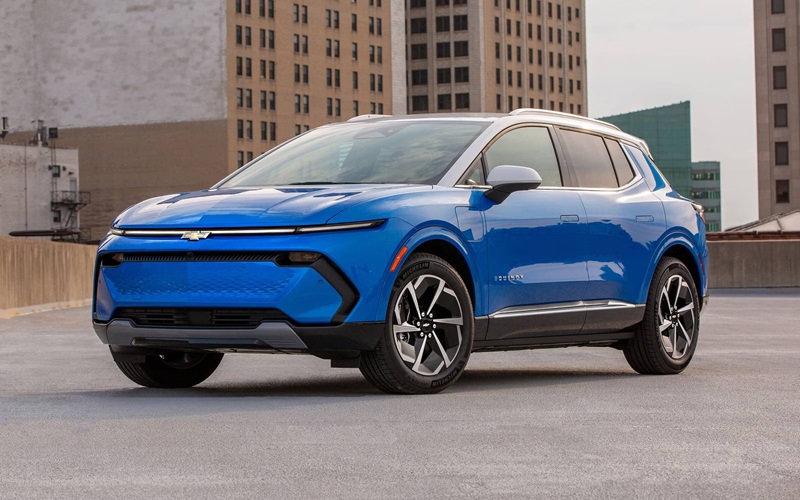
2026 Chevrolet Equinox EV: What Regenerative Braking System?
The Chevrolet Equinox EV incorporates a regenerative braking system as a core component of its electric powertrain. This system captures kinetic energy during deceleration and converts it into electrical energy, which is stored in the high-voltage battery. By integrating regenerative braking with conventional friction braking, the vehicle improves energy efficiency, extends driving range, and reduces […]
The Chevrolet Equinox EV incorporates a regenerative braking system as a core component of its electric powertrain. This system captures kinetic energy during deceleration and converts it into electrical energy, which is stored in the high-voltage battery. By integrating regenerative braking with conventional friction braking, the vehicle improves energy efficiency, extends driving range, and reduces mechanical wear.

Regenerative Braking in the 2026 Equinox EV
Regenerative braking in the Chevrolet Equinox EV is part of a coordinated braking strategy that combines electrical energy recovery with mechanical braking.
Core Objectives
- Recover kinetic energy during deceleration
- Reduce reliance on friction brakes
- Improve overall energy efficiency
- Maintain consistent braking performance
The system is managed by multiple control units, including the Vehicle Control Module (VCM) and Brake Control Module.
Fundamental Operating Principle
Energy Conversion Process
When the driver reduces accelerator input or applies the brake pedal:
- The electric motor switches from drive mode to generator mode
- Rotational energy from the wheels drives the motor
- Electrical energy is generated and sent to the battery
Kinetic to Electrical Energy Conversion
The process follows standard electromechanical principles:
- Mechanical rotation induces current in the motor windings
- Power electronics convert generated current to suitable voltage levels
- Energy is stored in the battery pack
Electric Drive Unit Integration
Traction Motor Function
The traction motor plays a dual role:
- Propulsion during acceleration
- Energy generation during deceleration
Inverter System
The inverter controls the flow of electrical energy between the motor and battery.
Functions
- Converts direct current (DC) from the battery into alternating current (AC) for motor operation
- Converts AC generated during braking back into DC for storage
Brake Blending System
Integrated Braking Strategy
The Equinox EV uses a brake blending system to coordinate regenerative and friction braking.
Operation
- Light deceleration: primarily regenerative braking
- Moderate deceleration: combination of regenerative and friction braking
- Heavy braking: friction braking dominates
Control Logic
The system continuously calculates:
- Vehicle speed
- Battery state of charge
- Driver input
- Road conditions
Based on these inputs, it determines the optimal balance between regenerative and hydraulic braking.
Hydraulic Braking System Interaction
Conventional Brake Components
- Brake pedal
- Master cylinder
- Brake calipers
- Brake discs
Role in Regenerative System
Friction brakes provide:
- Additional stopping force when regenerative capacity is insufficient
- Backup braking capability
- Consistent performance at low speeds
One-Pedal Driving Function
Deceleration Control
The system supports a driving mode where lifting off the accelerator initiates significant regenerative braking.
Characteristics
- Adjustable deceleration levels
- Reduced need for brake pedal input
- Increased energy recovery
Driver Interface
Drivers can typically adjust regenerative braking intensity through vehicle settings or steering controls.
Energy Recovery Efficiency
Factors Affecting Efficiency
- Vehicle speed
- Battery state of charge
- Motor efficiency
- Temperature conditions
High State of Charge Limitation
When the battery is near full capacity, regenerative braking capability may be reduced to prevent overcharging.
Thermal Management
Heat Generation
Electrical components generate heat during energy conversion.
Cooling Systems
- Liquid cooling for battery and power electronics
- Thermal monitoring sensors
These systems maintain optimal operating temperatures.
Electronic Control Systems
Vehicle Control Module (VCM)
Coordinates regenerative braking with overall vehicle operation.
Brake Control Module
Manages hydraulic braking and integrates it with regenerative inputs.
Sensor Inputs
- Wheel speed sensors
- Brake pedal position sensor
- Accelerator position sensor
- Battery temperature and charge sensors
Safety and Redundancy
Fail-Safe Mechanisms
If regenerative braking is unavailable:
- The system defaults to full hydraulic braking
- Driver control is maintained
Stability Control Integration
Regenerative braking is coordinated with stability systems to prevent wheel slip.
Low-Speed Operation
At very low speeds (typically below 5–10 km/h), regenerative braking effectiveness decreases.
Reason
- Reduced motor rotational speed
- Lower energy generation capability
Compensation
Friction brakes handle most braking at low speeds.
System Calibration and Performance Tuning
Deceleration Profiles
Engineers calibrate the system to provide smooth and predictable deceleration.
Driver Feel
Brake pedal response is tuned to ensure consistent feedback regardless of braking source.
Maintenance Implications
Reduced Brake Wear
Regenerative braking reduces the use of friction brakes.
Inspection Requirements
- Brake fluid condition
- Brake pad wear (reduced but still necessary)
- System diagnostics
Technicians at Go North Surrey may use specialized tools to evaluate regenerative braking performance and system integration.
Charging Interaction
Energy Storage
Recovered energy is stored in the high-voltage battery.
Impact on Range
Regenerative braking helps extend driving range by recovering energy that would otherwise be lost as heat.
Environmental and Efficiency Benefits
Reduced Energy Loss
Traditional braking converts kinetic energy into heat, while regenerative braking recovers part of that energy.
Emissions Impact
Improved efficiency reduces overall energy consumption, indirectly lowering environmental impact.
System Limitations
Physical Constraints
- Limited by motor capacity
- Dependent on battery acceptance rate
Environmental Conditions
- Cold temperatures can reduce battery efficiency
- Wet or slippery surfaces may limit regenerative force for stability reasons
Diagnostics and Monitoring
Onboard Diagnostics
The system continuously monitors performance and stores fault codes when issues arise.
Warning Indicators
Drivers may be alerted if regenerative braking performance is reduced.
Go North Surrey can perform diagnostic evaluations using manufacturer-approved procedures.
2026 Chevrolet Equinox EV FAQ
What is regenerative braking in the 2026 Chevrolet Equinox EV?
It is a system that converts kinetic energy into electrical energy during deceleration and stores it in the battery.
Does regenerative braking replace traditional brakes?
No, it works alongside hydraulic brakes, which are still used for full stopping power and low-speed braking.
What is one-pedal driving?
It is a mode in which releasing the accelerator initiates strong regenerative braking, reducing the need to use the brake pedal.
Why does regenerative braking decrease at high battery charge?
The system limits energy recovery to prevent overcharging the battery.
How is regenerative braking maintained?
It requires minimal maintenance, but the overall braking system should be inspected regularly for proper operation.
Disclaimer: Content contained in this post is for informational purposes only and may include features and options from US or internacional models. Please contact the dealership for more information or to confirm vehicle, feature availability.